BRICS
Dismantling Western Order
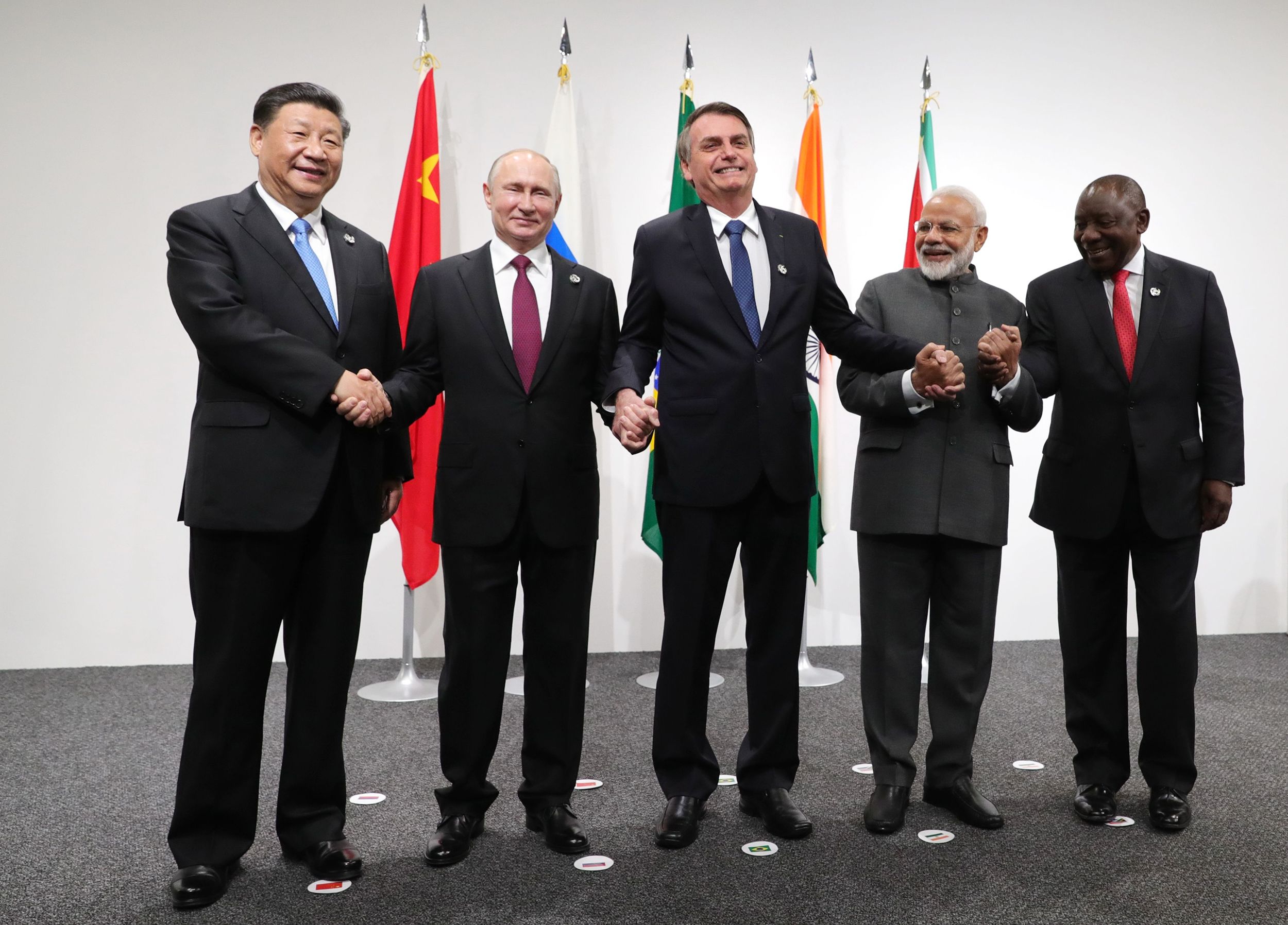
Since the mid-20th century, the global order – from financial institutions to security alliances – has been largely shaped by Western powers. Many emerging nations have long bristled at this Western-dominated status quo, and the BRICS coalition (Brazil, Russia, India, China, South Africa) has become a symbol of their collective ambition to reform it. Together, the BRICS countries represent roughly 40–45% of the world’s population and a substantial share of global GDP , giving heft to their calls for a multipolar system where the “Global South” has greater sway. BRICS leaders openly seek to challenge Western-led institutions of global governance and even to reduce reliance on the U.S. dollar in international trade , with some heralding this shift as the dawn of a post-Western world order . Dismantling the Western Order thus invites debate on whether the rise of BRICS will lead to a more equitable international system or simply intensify great-power rivalry. Delegates must grapple with how a new balance of power could be structured – weighing reforms that address historical imbalances against the risk of fracturing the cooperative frameworks that have (so far) underpinned global stability.
Since the mid-20th century, the global order – from financial institutions to security alliances – has been largely shaped by Western powers. Many emerging nations have long bristled at this Western-dominated status quo, and the BRICS coalition (Brazil, Russia, India, China, South Africa) has become a symbol of their collective ambition to reform it. Together, the BRICS countries represent roughly 40–45% of the world’s population and a substantial share of global GDP , giving heft to their calls for a multipolar system where the “Global South” has greater sway. BRICS leaders openly seek to challenge Western-led institutions of global governance and even to reduce reliance on the U.S. dollar in international trade , with some heralding this shift as the dawn of a post-Western world order . Dismantling the Western Order thus invites debate on whether the rise of BRICS will lead to a more equitable international system or simply intensify great-power rivalry. Delegates must grapple with how a new balance of power could be structured – weighing reforms that address historical imbalances against the risk of fracturing the cooperative frameworks that have (so far) underpinned global stability.
Since the mid-20th century, the global order – from financial institutions to security alliances – has been largely shaped by Western powers. Many emerging nations have long bristled at this Western-dominated status quo, and the BRICS coalition (Brazil, Russia, India, China, South Africa) has become a symbol of their collective ambition to reform it. Together, the BRICS countries represent roughly 40–45% of the world’s population and a substantial share of global GDP , giving heft to their calls for a multipolar system where the “Global South” has greater sway. BRICS leaders openly seek to challenge Western-led institutions of global governance and even to reduce reliance on the U.S. dollar in international trade , with some heralding this shift as the dawn of a post-Western world order . Dismantling the Western Order thus invites debate on whether the rise of BRICS will lead to a more equitable international system or simply intensify great-power rivalry. Delegates must grapple with how a new balance of power could be structured – weighing reforms that address historical imbalances against the risk of fracturing the cooperative frameworks that have (so far) underpinned global stability.