DUal Crisis
Cuban Missle Crisis
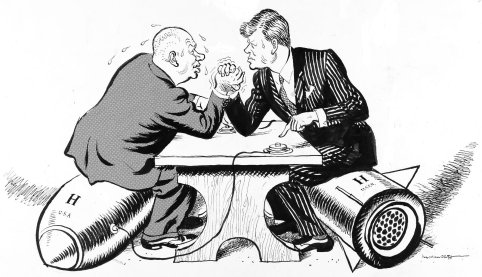
Amid the high tensions of the Cold War, the Cuban Missile Crisis of October 1962 erupted when the Soviet Union’s secret deployment of nuclear missiles in Cuba brought the world to the brink of nuclear war. For thirteen harrowing days, the United States and the USSR engaged in a perilous standoff – a game of nuclear brinkmanship – with each side weighing military action while desperately seeking a diplomatic exit. U.S. President John F. Kennedy and Soviet Premier Nikita Khrushchev communicated through urgent letters and back-channel negotiations, acutely aware that one miscalculation could unleash unprecedented destruction. In this dual crisis committee, delegates are split into two rooms (representing the U.S. and the USSR) and must react in real time to the other side’s moves and crisis notes, simulating the pressure and uncertainty of those fateful October days. The simulation challenges participants to grapple with high-stakes decision-making under extreme duress, mirroring how careful diplomacy and restraint ultimately averted catastrophe in 1962 – and underscoring the enduring lesson that even sworn adversaries must keep channels of communication open to preserve peace.
Amid the high tensions of the Cold War, the Cuban Missile Crisis of October 1962 erupted when the Soviet Union’s secret deployment of nuclear missiles in Cuba brought the world to the brink of nuclear war. For thirteen harrowing days, the United States and the USSR engaged in a perilous standoff – a game of nuclear brinkmanship – with each side weighing military action while desperately seeking a diplomatic exit. U.S. President John F. Kennedy and Soviet Premier Nikita Khrushchev communicated through urgent letters and back-channel negotiations, acutely aware that one miscalculation could unleash unprecedented destruction. In this dual crisis committee, delegates are split into two rooms (representing the U.S. and the USSR) and must react in real time to the other side’s moves and crisis notes, simulating the pressure and uncertainty of those fateful October days. The simulation challenges participants to grapple with high-stakes decision-making under extreme duress, mirroring how careful diplomacy and restraint ultimately averted catastrophe in 1962 – and underscoring the enduring lesson that even sworn adversaries must keep channels of communication open to preserve peace.
Amid the high tensions of the Cold War, the Cuban Missile Crisis of October 1962 erupted when the Soviet Union’s secret deployment of nuclear missiles in Cuba brought the world to the brink of nuclear war. For thirteen harrowing days, the United States and the USSR engaged in a perilous standoff – a game of nuclear brinkmanship – with each side weighing military action while desperately seeking a diplomatic exit. U.S. President John F. Kennedy and Soviet Premier Nikita Khrushchev communicated through urgent letters and back-channel negotiations, acutely aware that one miscalculation could unleash unprecedented destruction. In this dual crisis committee, delegates are split into two rooms (representing the U.S. and the USSR) and must react in real time to the other side’s moves and crisis notes, simulating the pressure and uncertainty of those fateful October days. The simulation challenges participants to grapple with high-stakes decision-making under extreme duress, mirroring how careful diplomacy and restraint ultimately averted catastrophe in 1962 – and underscoring the enduring lesson that even sworn adversaries must keep channels of communication open to preserve peace.